Skip to content
Delton MendenhallThe Honest Dram Shelf

Plainspoken books for the home bar

Choose bottles you will actually open

I wrote three plain PDF books for the moments I know: choosing a bottle, making the pour comfortable, and reading the label before the story sets the price.

Sound on — Delton Mendenhall explains everything in 3 minutes.

Press play with the sound on. I will show you the shelf problem these books address and the plain rules I use at home.

Review delivery and refund terms at checkout.

The Honest Dram Shelf

The shelf fills up before your taste does

I wrote these books for the ordinary moments when a drink is meant to be enjoyed, but the shelf, the label or the ritual gets in the way. Here are the situations I keep seeing at my home bar.

  • A famous name, dark glass and a heavy box make the decision for you; the bottle then sits nearly full because nobody asked what flavour job it had.
  • Three respectable whiskies arrive through separate recommendations, but all bring the same sweetness or oak, so the shelf offers no useful contrast.
  • The word smooth hides five different wishes: less alcohol prickle, lighter texture, sweetness, little smoke or a short finish. The wrong bottle misses the point.
  • A home-bar pour turns into a performance about glass shape, water and ice, when the drinker really wants permission to make the dram comfortable.
  • A price rises with the story, scarcity or a famous label, while strength, age, filtration and maker stay unread.

The books

The Honest Dram Shelf

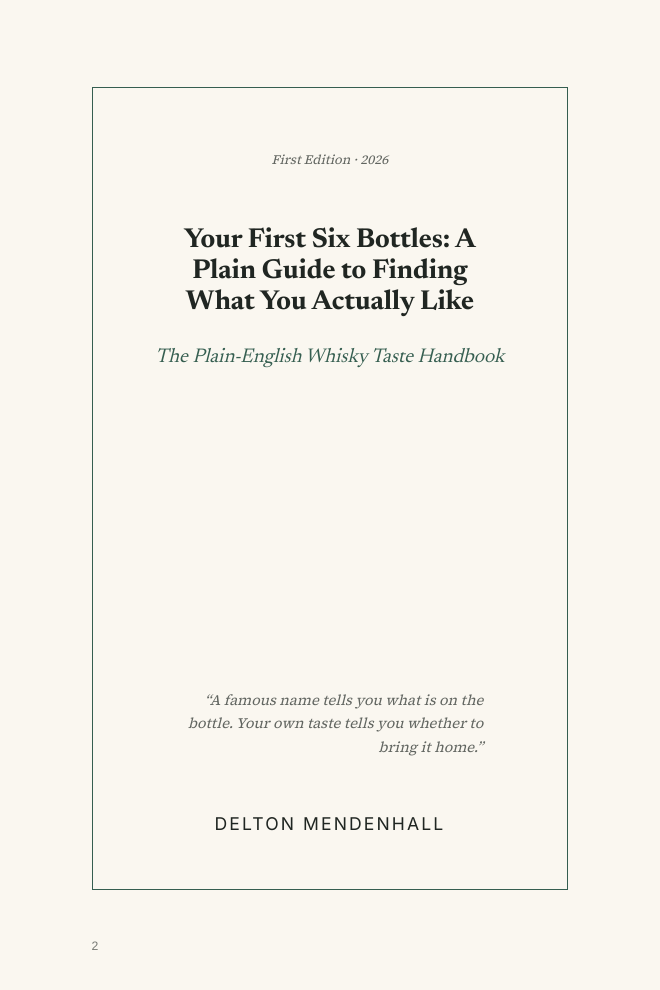
Your First Six Bottles: A Plain Guide to Finding What You Actually Like

The books / 01

Your First Six Bottles: A Plain Guide to Finding What You Actually Like

The Plain-English Whisky Taste Handbook

Choose the flavour job before the bottle. A useful six-bottle shelf changes one dial at a time instead of collecting six versions of the same mistake.

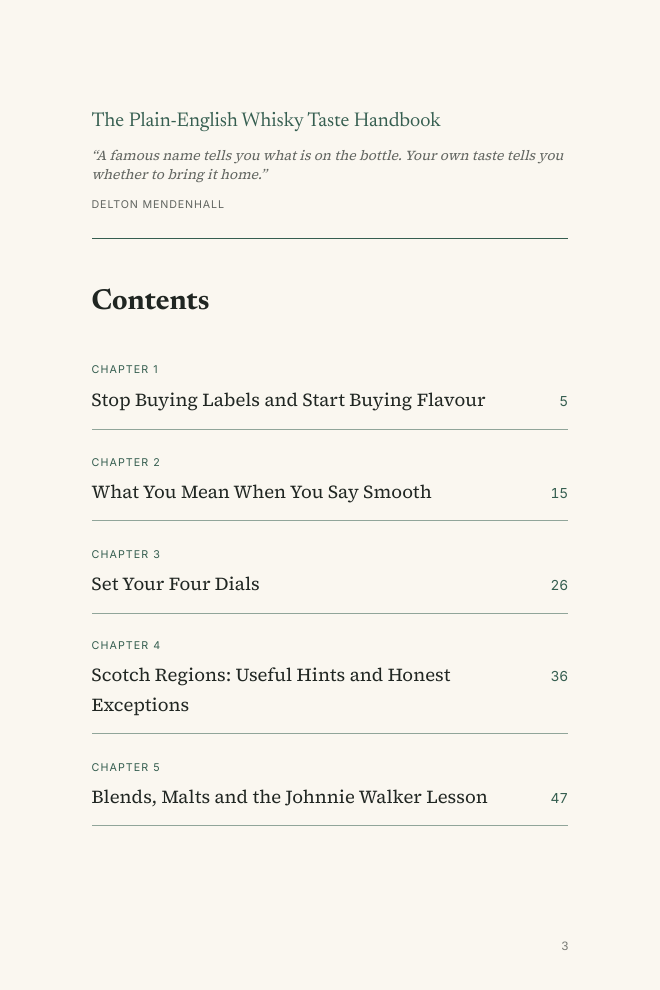
Your First Six Bottles starts with the Bottle-by-Bottle Trap: buying famous names, regions or age statements without naming the flavour you want. I show you how to separate alcohol prickle, sweetness, texture, smoke and finish, then score Sweet, Fruit, Smoke and Spice with the Strength Slider. Chapters such as Scotch Regions: Useful Hints and Honest Exceptions and Blends, Malts and the Johnnie Walker Lesson replace hierarchy with usable clues. You will work through Your First Scotch Rungs, the three-bottle bourbon trial of Evan Williams Bottled in Bond, Wild Turkey 101 and Four Roses Small Batch, and six shelf roles. It is for a beginner building a useful shelf, not a trophy cabinet.

Selected chapters

  1. Stop Buying Labels and Start Buying Flavour
  2. What You Mean When You Say Smooth
  3. Set Your Four Dials
  4. Scotch Regions: Useful Hints and Honest Exceptions
  5. Blends, Malts and the Johnnie Walker Lesson
  6. Your First Scotch Rungs
  7. Crossing Between Scotch, Bourbon and Rye
  8. Four Whisky Countries Without Four New Rulebooks

The Home Bar — Pour It, Keep It, Share It — Without the Snobbery

The books / 02

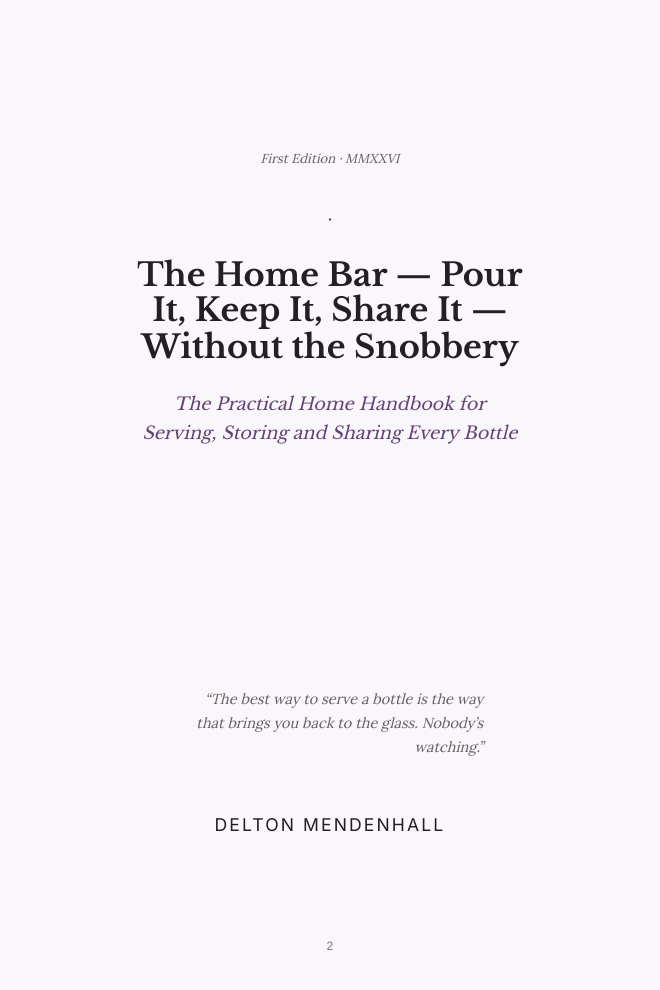
The Home Bar — Pour It, Keep It, Share It — Without the Snobbery

The Practical Home Handbook for Serving, Storing and Sharing Every Bottle

A glass, a few drops of water and clean ice are tools, not tests. The best serve is the one that lets you notice the drink and want another small sip.

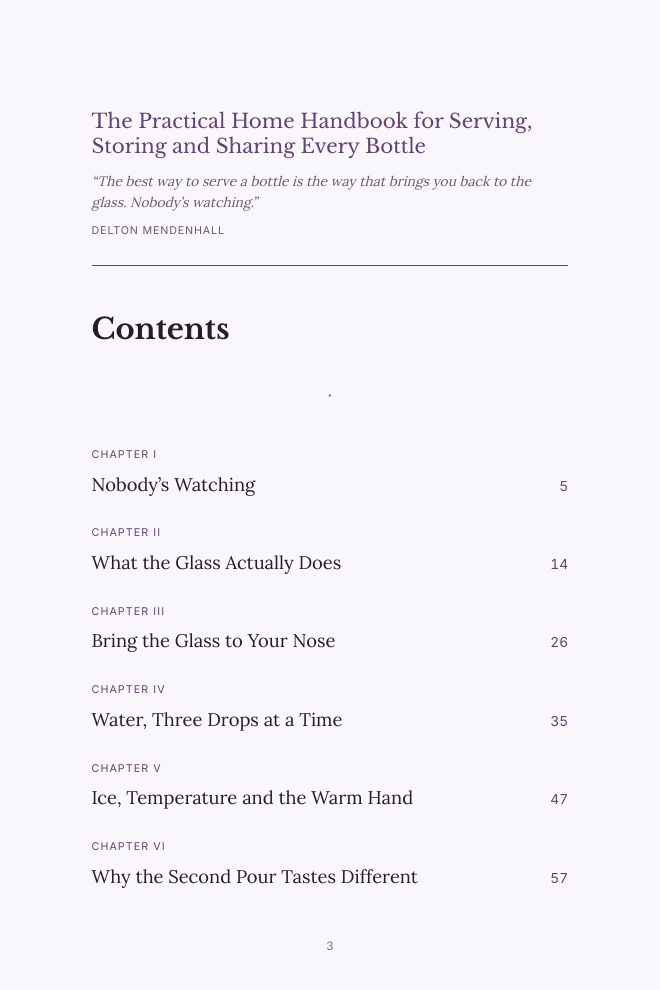
The Home Bar begins with a simple permission: nobody is watching. It separates choices that change the drink—glass shape, temperature, dilution and pour size—from ceremony that mainly signals belonging. You get a practical glassware map, a burn-free nosing sequence, the three-drop water method, an ice comparison and a shelf inspection for light, heat, closures and headspace. Later chapters handle saved bottles, inherited-bottle identification without valuation advice, a kitchen-table tasting kit and a four-pour blind test with 15 ml or half-ounce measures. This is for the person who wants to serve whisky, rum, brandy or liqueurs comfortably, whether the glass holds ice, water or nothing added. It makes room for disagreement and ordinary household equipment.

Selected chapters

  1. Nobody’s Watching
  2. What the Glass Actually Does
  3. Bring the Glass to Your Nose
  4. Water, Three Drops at a Time
  5. Ice, Temperature and the Warm Hand
  6. Why the Second Pour Tastes Different
  7. Keep the Bottle Alive
  8. Open the One You’ve Been Saving
The Brand Tax — How to Tell a Good Bottle From a Good Story

The books / 03

The Brand Tax — How to Tell a Good Bottle From a Good Story

The Sceptical Drinker's Field Handbook to Honest Bottles

Read the back before the story takes over: strength, filtration, colour, age, maker, then the local shelf price. Scarcity and resale are not evidence of flavour.

The Brand Tax gives you a shop-floor method for separating liquid evidence from the story on the box. The Five-Line Audit reads strength, chill filtration, colour, age and maker, then adds the price tag as the line nobody prints. The Forty Percent Floor explains 40%, 43%, 46% and 50% strength; Age, Angels and Empty Numbers handles over-oaked casks, solera language and no-age statements. You will apply the same-house rule to Johnnie Walker Green and Blue, compare bourbon and cognac labels, and find alternatives such as Arran 10, Kilkerran 12, Craigellachie 13, Benromach 10, Bunnahabhain 12 and Powers Gold Label. It is for drinkers who want a fair decision, not a resale story.

Selected chapters

  1. The Stag on the Bottle and the Hole in the Wallet
  2. The Five-Line Audit
  3. The Forty Percent Floor
  4. The Filter and the Dye
  5. Age, Angels and Empty Numbers
  6. Who Actually Made This?
  7. The Same-House Rule
  8. Bourbon's Own Ledger

Selected chapters

Three ways into the shelf

Start where the immediate irritation lives, then use the other books as working companions. The route below follows flavour, the physical pour and the shelf label—not prestige.

  1. When the bottles all sound alike

    Open Stop Buying Labels and Start Buying Flavour in Your First Six Bottles, then score your Sweet, Fruit, Smoke and Spice dials. Use the result to choose the next bottle by flavour job, not region, age statement or box.

  2. When the pour feels like a ceremony

    Open Nobody’s Watching in The Home Bar. Compare a small tulip glass with a tumbler, then try water, ice or neither; follow Water, Three Drops at a Time when the pour is strong.

  3. When the label is doing the selling

    Open The Five-Line Audit in The Brand Tax. Turn a bottle around and read strength, filtration, colour, age and maker before the price tag and same-house comparison decide whether the story earns your money.

Look inside

See the work before you buy

The sample pages show the work in its natural voice: a nearly full shelf of respectable mistakes, an imaginary judge fussing over the glass, and a silver stag doing too much work on a label. Open a page and read it. The chapters go on to give you the Four Dials, the three-drop method, storage checks, blind pours and the Five-Line Audit.

Your First Six Bottles: A Plain Guide to Finding What You Actually Like
Your First Six Bottles: A Plain Guide to Finding What You Actually Like ↗
Your First Six Bottles: A Plain Guide to Finding What You Actually Like
Your First Six Bottles: A Plain Guide to Finding What You Actually Like ↗
The Home Bar — Pour It, Keep It, Share It — Without the Snobbery
The Home Bar — Pour It, Keep It, Share It — Without the Snobbery ↗
The Home Bar — Pour It, Keep It, Share It — Without the Snobbery
The Home Bar — Pour It, Keep It, Share It — Without the Snobbery ↗

What you get

The complete shelf, in three books

The complete set brings together three PDF ebooks: Your First Six Bottles (121 pages), The Home Bar (111 pages), and The Brand Tax (94 pages). Read them as a shelf-building path from flavour choice to serving to label judgement, with concrete chapters and bottle examples throughout. Open a page first, then decide if the work belongs beside your bottles.

Your First Six Bottles: A Plain Guide to Finding What You Actually LikeThe Home Bar — Pour It, Keep It, Share It — Without the SnobberyThe Brand Tax — How to Tell a Good Bottle From a Good Story

Your order

The Honest Dram Shelf

$27

PDF ebooks: Your First Six Bottles (121 pages), The Home Bar (111 pages), and The Brand Tax (94 pages).

  • Your First Six Bottles: A Plain Guide to Finding What You Actually Like · 121 · PDF
  • The Home Bar — Pour It, Keep It, Share It — Without the Snobbery · 111 · PDF
  • The Brand Tax — How to Tell a Good Bottle From a Good Story · 94 · PDF
Get the three-book set $27

Review delivery and refund terms at checkout.

Delton Mendenhall

From the author

A drinker at the home bar

I am Delton Mendenhall, a drinker rather than a chemist. I am based in a quiet market town in northern England, where my home bar has become the informal stop for friends wanting an honest bottle recommendation. I spent years around pubs, bottle shops and small distributors, learning what whisky, rum, brandy and liqueurs cost before marketing departments discovered scarcity.

I keep a bottle of Buffalo Trace at home at all times. I give Johnnie Walker Green Label to people who think they dislike Scotch, and I change my mind when a bottle proves me wrong: over-oaked casks cured me of assuming older was better, and tasting Buffalo Trace properly won me over. I wrote these books for drinkers who want a varied shelf and a comfortable glass, not a ceremony.

— Delton Mendenhall

This is for you if

Who I wrote this for

This is for you if

  • You are starting a whisky shelf and want flavour words more useful than regions, medals or the word smooth.
  • You want to serve bottles at home with water, ice, mixers or ordinary glasses without feeling graded.
  • You want to compare labels by strength, age, filtration, maker and current local shelf value.

A different starting point if

  • You want a collector’s catalogue, investment case or resale justification; these books keep drinking interest separate from collector interest.
  • You want exhaustive distilling chemistry or a fixed worldwide price list instead of practical shelf decisions.

The Honest Dram Shelf

Questions

Is this for someone who is new to whisky?

Yes. Your First Six Bottles starts with the Bottle-by-Bottle Trap, defines words such as smooth through practical contrasts, and gives a beginner route through bourbon and Scotch. You do not need a trained palate or a shelf full of bottles; curiosity and a willingness to taste are enough.

What does each book actually do?

Your First Six Bottles helps you name flavour and build six distinct shelf roles. The Home Bar covers glassware, nosing, water, ice, storage and relaxed tastings. The Brand Tax teaches the Five-Line Audit so strength, filtration, colour, age and maker get read before the story.

Are these books only about whisky served neat?

No. Delton says whisky may be enjoyed with water or ice, and The Home Bar makes room for mixers, tumblers and ordinary household glasses. The point is to notice what changes the drink and choose the serve you actually want.

What files and page counts are included?

Each book is available as a PDF ebook. The known page counts are 121 pages for Your First Six Bottles, 111 for The Home Bar and 94 for The Brand Tax.

Will the bottle recommendations work in my local market?

The recommendations are practical examples, not a worldwide price list. Delton judges value by current local shelf prices and availability, so use the audit and check the bottles and prices in your own market.

Can I use the books when choosing a gift?

Yes. Choose the Next Bottle—or the Right Gift asks about favourite foods, smoke tolerance, usual drink, strength and whether the bottle will be mixed or sipped. Glenmorangie Signet, Arran 10 and other examples are used as comparisons, not compulsory answers.

Do the books give valuation or resale advice?

No resale promise is made. The Home Bar gives a non-valuation route for identifying an inherited bottle, while The Brand Tax keeps collector interest separate from drinking interest and refuses resale as a reason to buy.

Where can I check delivery and refund terms?

Review delivery and refund terms at checkout before completing your order.

Take the shelf rules with you

If you want a bottle chosen by flavour, served without ceremony and judged by what is actually on the label, start here. Open a page first; if the voice is useful, I will meet you at the counter.

Get the three-book set $27

Review delivery and refund terms at checkout.